
 See Our Latest Article on HelloNation
How can a heavy backpack affect a child’s health?
A backpack that is too heavy, poorly fitted, or carried on one shoulder can strain a child’s back, neck, shoulders, and hips. The effects may appear as soreness, muscle fatigue, headaches, changes in posture, or difficulty walking comfortably.
Children’s bodies are still developing, and they may not recognize early signs of strain. Some continue carrying an overloaded backpack because they are rushing between classes, walking to and from school, or carrying extra clothing and equipment for after-school activities.
A heavy backpack does not cause scoliosis, and it does not permanently change the shape of a healthy spine by itself. However, excessive weight can create temporary posture changes and increase stress on muscles and joints.
How heavy is too heavy?
A practical guideline is to keep a fully loaded backpack at no more than about 10% to 15% of a child’s body weight. Staying near the lower end is especially sensible for younger children, children with existing pain, or students who walk longer distances.
Examples include:
- A child weighing 50 pounds should carry about 5 to 7.5 pounds or less.
- A child weighing 70 pounds should carry about 7 to 10.5 pounds or less.
- A child weighing 100 pounds should carry about 10 to 15 pounds or less.
The total includes the backpack itself, books, notebooks, lunch, water, electronic devices, sports equipment, and clothing. A bag that feels manageable for a few minutes may become uncomfortable after a full day or a longer walk.
Rather than relying only on a scale, observe how the child moves. Trouble putting the backpack on, leaning forward, shrugging the shoulders, changing walking patterns, or complaining that the straps dig into the body may indicate that the load is excessive.
What symptoms can an overloaded backpack cause?
Backpack-related strain commonly affects the upper back, lower back, neck, and shoulders. A child may report discomfort during the school day or later in the afternoon after the bag has been carried for several hours.
Possible signs include:
- Aching or sharp pain in the back, neck, or shoulders
- Tingling, numbness, or weakness in an arm or hand
- Red marks or pressure points from the straps
- Headaches associated with neck or shoulder tension
- Leaning forward or to one side while walking
- Difficulty standing upright after removing the backpack
- Fatigue during routine walking or stair climbing
- Pain that returns each school day
A child may also compensate by lifting one shoulder, tightening the neck muscles, or carrying the bag with one hand. These adjustments can shift stress to one side of the body instead of distributing it evenly.
Persistent, severe, or worsening pain should not be dismissed as a normal part of growing up. Medical evaluation is especially appropriate if pain occurs at night, follows an injury, or is accompanied by fever, weakness, numbness, loss of coordination, or changes in bladder or bowel control.
What is the safest way to wear a backpack?
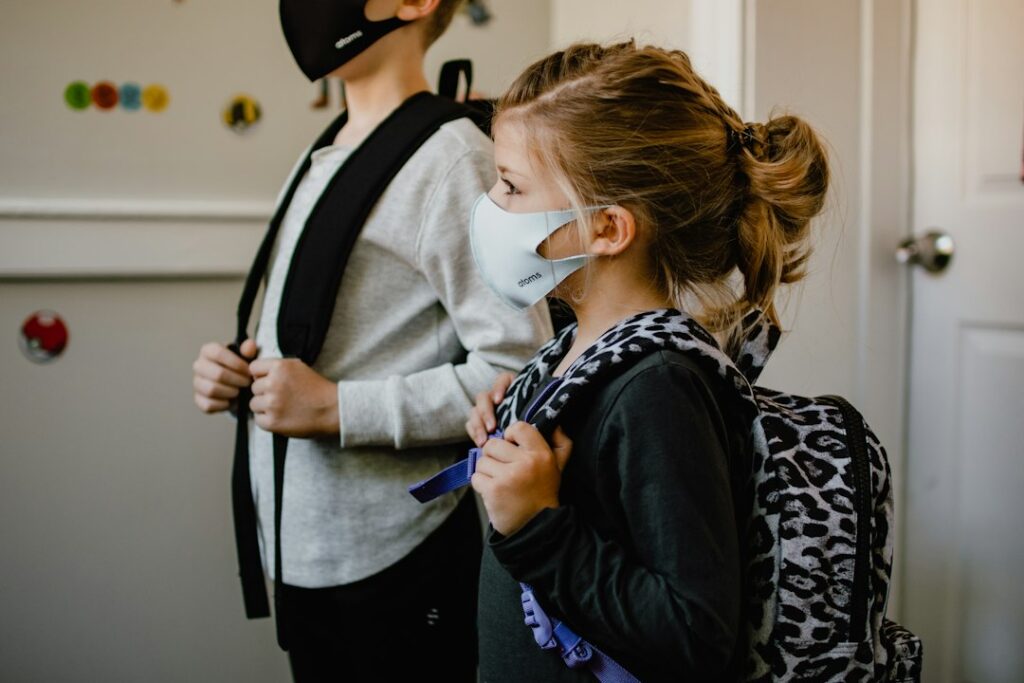
The backpack should rest evenly on both shoulders with the bottom positioned near the child’s lower back rather than hanging near the hips. The straps should be adjusted so the bag stays close to the body without restricting breathing or arm movement.
Helpful features include:
- Two wide, padded shoulder straps
- A padded back panel
- Multiple compartments for distributing contents
- A chest or waist strap when the load is substantial
- A lightweight design that does not add unnecessary weight
Both shoulder straps should be used. Wearing a backpack on one shoulder may look convenient, but it places more of the load on one side and can encourage uneven posture.
The heaviest items should be placed low and close to the center of the back. Smaller items can go in outer compartments. Sharp-edged objects should be positioned so they do not press into the child’s spine.
A backpack should not hang so low that the child must lean forward to balance it. At the same time, tightening the straps excessively can place pressure on the shoulders and upper back.
How can families reduce the daily load?
The most effective strategy is to remove items that are not needed. A weekly backpack check can help identify old papers, extra books, toys, duplicate supplies, and partially filled water bottles.
Families in Ramapo may also need to account for changing weather and different daily routines. Children may carry coats, rain gear, athletic clothing, or extra layers during seasonal transitions. Keeping some items in a classroom, locker, or designated storage area—when available—can prevent the backpack from becoming overloaded.
Other practical steps include:

- Check the backpack’s weight at home from time to time.
- Use a smaller water bottle when a full-size bottle is unnecessary.
- Carry sports equipment separately when possible.
- Use digital materials only when they genuinely replace heavier items.
- Encourage children to empty the bag at least once a week.
- Ask whether every item is needed for that day.
- Replace a damaged bag if broken straps force the child to carry it unevenly.
Rolling bags may reduce shoulder strain in some situations, but they are not always practical on stairs, uneven walkways, snow, or crowded school corridors. A rolling bag can also create wrist, elbow, or shoulder strain if it is pulled for long distances. The safest choice depends on the child’s route, school rules, and ability to maneuver the bag comfortably.
Does backpack use affect posture?
A heavy or poorly adjusted backpack can temporarily change posture. Children may lean forward, round the shoulders, widen their stance, or tilt to one side to maintain balance. These changes usually improve when the load is reduced and the backpack is fitted correctly.
Good posture does not mean holding the body rigidly or forcing the shoulders backward. Children should be able to walk, sit, bend, and turn comfortably. A well-fitted backpack should allow natural movement rather than making the child brace against the weight.
Backpack habits are only one part of a child’s musculoskeletal health. Time spent sitting, recreational activities, sleep, footwear, previous injuries, and overall physical conditioning can also influence discomfort.
When should a child’s pain be checked?
Mild soreness that improves after removing an overloaded backpack may resolve after the load and fit are corrected. Pain that continues, repeatedly returns, or interferes with school, sleep, sports, or normal movement deserves closer attention.
A parent or caregiver should seek medical guidance promptly for pain accompanied by numbness, weakness, balance problems, significant trauma, fever, unexplained weight loss, or nighttime waking. Children should also be encouraged to describe symptoms accurately rather than being told to ignore them.
Chiropractic education often emphasizes practical changes such as load distribution, comfortable movement, and awareness of early strain. Those measures can be useful, but they do not replace appropriate pediatric or medical assessment when symptoms are persistent or concerning.
A simple daily backpack check
Before leaving for school, a child can ask:
- Is the bag light enough to carry comfortably?
- Am I using both shoulder straps?
- Does the backpack sit close to my back?
- Are the heaviest items near the center and lower part of the bag?
- Can I walk, turn, and climb stairs without leaning or pain?
- Did I pack anything that is not needed today?
These habits help make backpack use safer while allowing children to remain active, independent, and comfortable throughout the school day.
